How Is It Possible for Ski Jumpers to Stay in the Air So Long and How Do They Train for That?
Introduction
Watching a ski jumping competition for the first time can feel almost unreal. Athletes launch themselves off a steep ramp at high speeds and somehow remain suspended in the air far longer than most people think should be possible. For a few seconds, they appear to float above the ground before landing smoothly hundreds of feet away. It is one of the most fascinating sights in winter sports and often leaves viewers wondering how the human body can stay airborne for so long.
The truth is that ski jumping is a remarkable combination of science, athletic skill, and years of specialized training. Ski jumpers are not actually flying in the traditional sense, but they use aerodynamic principles so effectively that they can maximize the lift generated by their bodies and equipment. Every movement, from the moment they leave the ramp until they touch down, is carefully controlled to keep them in the air as long as possible.
Understanding how ski jumpers achieve these impressive flights requires looking at the physics behind the sport as well as the demanding training routines athletes follow. Their success depends not only on courage but also on precision, strength, balance, and technical mastery developed over countless hours of practice.
The Science Behind Staying in the Air
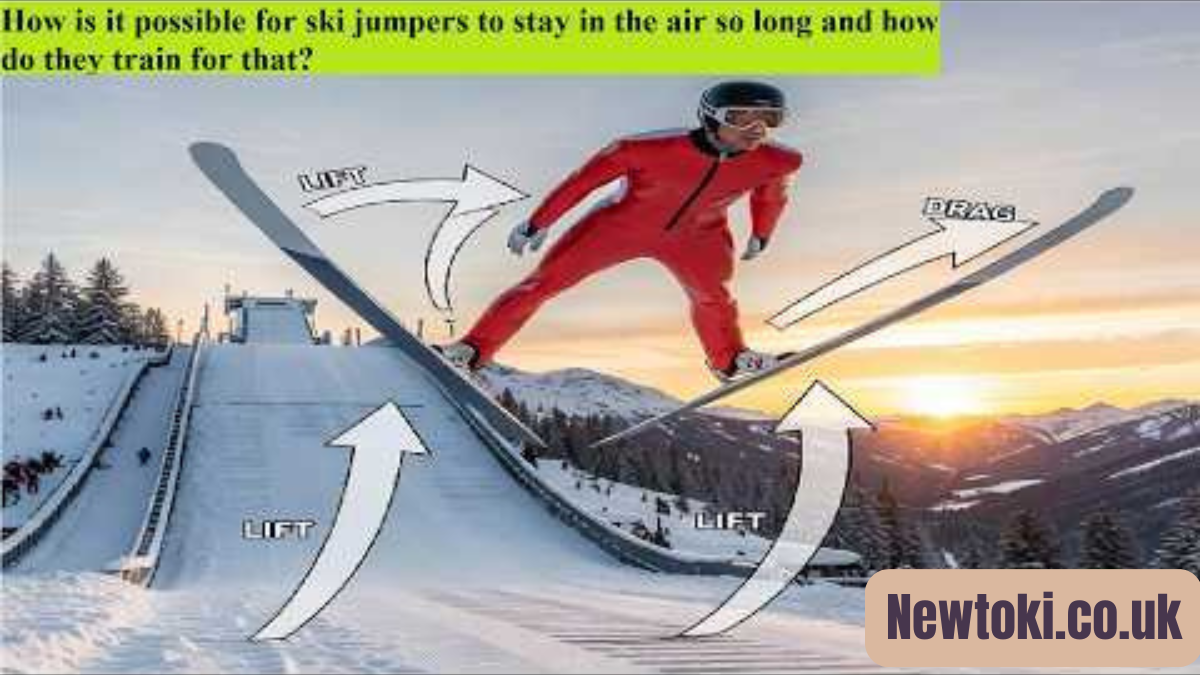
The primary reason ski jumpers can stay airborne for extended periods is aerodynamics. When a jumper leaves the takeoff ramp, they are already traveling at a very high speed. This speed creates airflow around their body and skis, which generates lift. Lift is the same basic force that helps airplanes remain in the sky, although the mechanism works on a much smaller scale for ski jumpers.
As air moves around the jumper, the position of their body becomes extremely important. Ski jumpers lean forward and spread their skis into a V-shape. This posture increases the surface area exposed to the air and allows them to generate more lift while reducing drag. Even small adjustments can have a significant impact on flight distance.
Gravity is constantly pulling the athlete downward, but lift helps counteract some of that force. The balance between gravity, lift, drag, and forward momentum determines how long a jumper remains in the air. Skilled athletes understand how to manage these forces and make subtle corrections throughout their flight to maximize performance.
Why the V-Style Changed the Sport
Modern ski jumping looks very different from how it appeared decades ago. In the past, jumpers kept their skis parallel during flight. While this technique was effective for its time, it did not produce as much lift as today’s approach.
The introduction of the V-style revolutionized the sport. Instead of keeping the skis together, athletes spread the tips outward while keeping the tails closer together. This creates a shape similar to the letter V. The position increases the amount of air flowing under the skis, generating more lift and allowing jumpers to travel farther.
At first, many coaches and officials were skeptical of the technique. However, results quickly proved its effectiveness. Athletes using the V-style consistently jumped farther than competitors using traditional methods. Today, it is the standard technique used by elite ski jumpers around the world and has significantly increased average jump distances.
The Importance of Takeoff Technique
The flight begins long before the athlete leaves the ramp. In fact, one of the most critical moments in ski jumping occurs during takeoff. A powerful and perfectly timed takeoff can dramatically improve the entire jump.
As athletes approach the end of the inrun, they maintain a compact aerodynamic position to minimize air resistance. The goal is to preserve as much speed as possible. At the exact right moment, they extend their legs explosively and launch themselves from the takeoff table.
Timing is everything during this phase. If a jumper pushes too early or too late, valuable speed and lift can be lost. Elite athletes spend years refining this movement until it becomes almost automatic. Coaches often analyze takeoff mechanics frame by frame because even tiny improvements can lead to significantly longer jumps.
Body Position During Flight
Once airborne, maintaining the correct body position becomes the athlete’s top priority. Unlike many sports where constant movement is required, ski jumping demands extraordinary stability and precision while traveling through the air.
Jumpers position their bodies almost parallel to their skis. Their chest remains close to the skis, creating a streamlined shape that improves airflow. The head stays steady while the arms are held in positions that help maintain balance and aerodynamic efficiency.
Every part of the body contributes to flight performance. A slight movement of the shoulders, hips, or knees can alter airflow and affect distance. Experienced jumpers develop an incredible awareness of their position and can make micro-adjustments without disrupting their flight path.
How Physical Fitness Supports Long Flights
Although ski jumping may look effortless during competition, it requires exceptional athletic ability. Athletes must develop strength, power, coordination, and endurance to perform consistently at a high level.
Leg strength is particularly important. The explosive push during takeoff relies heavily on powerful lower-body muscles. Exercises such as squats, lunges, and plyometric drills help athletes develop the force needed for successful launches.
Core strength is equally essential. A strong core allows jumpers to maintain stable flight positions and resist unwanted movements caused by wind or air pressure. Stability training becomes a major part of their conditioning programs because maintaining control in the air depends heavily on core muscle engagement.
Balance and Coordination Training
Balance is one of the defining skills of elite ski jumpers. Athletes must remain stable while traveling at high speeds and reacting to constantly changing environmental conditions.
Many training programs include exercises performed on unstable surfaces such as balance boards, wobble cushions, and specialized platforms. These drills challenge the body’s ability to maintain control and improve overall coordination.
Coordination training also focuses on developing quick reactions. Since ski jumping involves precise movements performed within fractions of a second, athletes must be able to execute complex actions automatically. Repetition and consistency help build the neuromuscular patterns required for successful jumps.
Dryland Training Throughout the Year
Contrary to what some people assume, ski jumpers do not train only during winter. Most elite athletes follow year-round training programs designed to maintain and improve performance regardless of the season.
During warmer months, jumpers often train on artificial surfaces that simulate snow conditions. These facilities allow athletes to practice their technique even when natural snow is unavailable. Summer ski jumping has become an essential part of modern athlete development.
Dryland training also includes running, cycling, strength workouts, flexibility exercises, and technical drills. This broad approach helps athletes build a strong physical foundation while continuing to refine the specific skills required for competition.
Wind Tunnel and Technology-Based Training
Modern ski jumping increasingly relies on advanced technology to improve performance. Wind tunnel testing has become a valuable tool for understanding how different body positions affect aerodynamics.
Inside a wind tunnel, athletes can experiment with subtle adjustments and immediately observe their effects on airflow. Coaches and sports scientists collect data that helps identify the most efficient flight positions.
Video analysis is another important component of training. High-speed cameras capture every stage of a jump, allowing coaches to study takeoff mechanics, body alignment, and landing technique in extraordinary detail. This information helps athletes make precise improvements that would be difficult to detect with the naked eye.
Mental Preparation and Confidence
Physical preparation alone is not enough in ski jumping. Mental strength plays a major role in success. Standing at the top of a large ski jump requires confidence, focus, and emotional control.
Athletes often work with sports psychologists to develop mental skills that improve performance. Visualization techniques are especially popular. Before a jump, athletes mentally rehearse every stage of the movement, from the inrun to the landing.
Managing fear is another important aspect of training. Ski jumpers are not fearless, but they learn how to control nervousness and maintain concentration under pressure. Confidence comes from preparation, experience, and trust in their abilities.
Landing Safely After Long Flights

Landing may appear simple compared to flight, but it is one of the most technically demanding parts of ski jumping. After spending several seconds in the air, athletes must transition smoothly back to the ground while maintaining balance.
Most jumpers use a technique known as the telemark landing. One foot is placed slightly ahead of the other while the knees remain bent. This position helps absorb impact forces and demonstrates control to judges.
Proper landing technique reduces injury risk and contributes to overall scoring. Athletes dedicate significant training time to perfecting this phase because a great flight can be undermined by an unstable landing.
Why Ski Jumpers Continue to Improve
Ski jumping distances have increased dramatically over the years due to improvements in technique, equipment, training methods, and sports science. Today’s athletes benefit from decades of accumulated knowledge and innovation.
Equipment manufacturers continually refine ski designs, suits, and boots to improve aerodynamic performance while staying within competition regulations. Coaches use advanced data analysis to identify areas for improvement and create more effective training programs.
As understanding of aerodynamics and human performance continues to evolve, ski jumpers are likely to keep pushing the boundaries of what is possible. The combination of science, athleticism, and dedication ensures that the sport remains one of the most exciting spectacles in winter athletics.
Conclusion
Ski jumpers stay in the air for surprisingly long periods because they skillfully use aerodynamic principles to generate lift while minimizing drag. High speeds, precise body positioning, specialized equipment, and expert technique all work together to create the appearance of flight.
Their ability is not the result of natural talent alone. Years of strength training, balance work, technical practice, mental preparation, and scientific analysis contribute to every successful jump. What looks effortless from the outside is actually the product of extraordinary discipline and preparation.
The next time you watch a ski jumping competition, you’ll know that those remarkable flights are made possible by a perfect blend of physics and athletic excellence. Each jump represents countless hours of training and a deep understanding of how to work with the forces of nature rather than against them.
FAQs
How is it possible for ski jumpers to stay in the air so long and how do they train for that?
Ski jumpers stay airborne by maximizing aerodynamic lift and train through strength, balance, technique, and year-round practice.
How fast do ski jumpers travel before takeoff?
Most elite ski jumpers reach speeds between 80 and 100 km/h before leaving the ramp.
Why do ski jumpers spread their skis in a V-shape?
The V-shape increases lift and helps athletes stay airborne longer.
Do ski jumpers train during summer?
Yes, they train year-round using artificial surfaces and specialized facilities.
Is ski jumping dangerous?
It carries risks, but strict safety standards and training help reduce them significantly.
What muscles are most important in ski jumping?
The legs and core muscles are especially important for takeoff power and flight stability.
Can weather affect ski jumping performance?
Yes, wind conditions can significantly influence distance and overall results.
Why is balance so important in ski jumping?
Good balance helps athletes maintain aerodynamic positions and control during flight.
Do ski jumpers use strength training?
Yes, strength training is a major part of their preparation and performance development.
What is a telemark landing?
It is the traditional ski jumping landing technique where one foot is placed slightly ahead of the other.
How long are ski jumpers usually in the air?
Depending on the hill size and conditions, they can remain airborne for several seconds.
Also read: Tiffany Henyard Net Worth: A Detailed Look at Her Income, Career, and Financial Standing